

Accident Event Recorder | Crenshaw Investigations
Accident Event Recorder
Crenshaw Investigations specializes in Accident Event Recorder retrieval and analysis, offering forensic insights to support accident investigations, legal cases, and insurance claims. Our team of forensic experts uses state-of-the-art technology to extract and analyze crash-related data from Event Data Recorders (EDRs).
By accurately reconstructing accident events, we help determine liability, detect fraudulent claims, and ensure fair settlements, providing scientifically backed evidence for legal and insurance purposes.
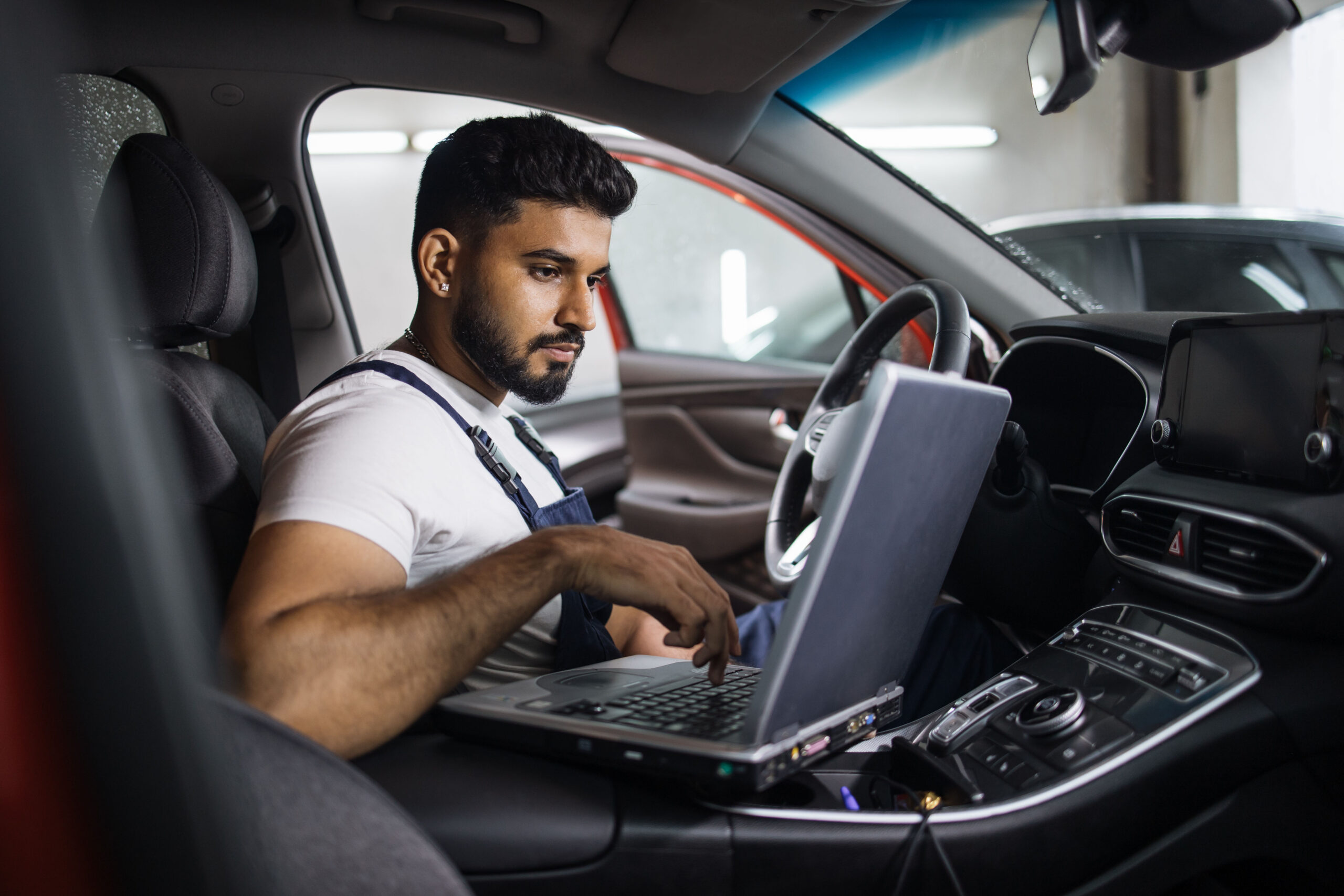
What is an Accident Event Recorder?
An Accident Event Recorder is a system that captures and stores crash-related data within a vehicle’s Event Data Recorder (EDR). This system records key information such as vehicle speed, braking, steering input, and impact forces before, during, and after a collision.
Accident reconstruction specialists analyze this data to accurately determine the sequence of events, helping legal professionals, insurance companies, and accident victims establish the facts of a crash with scientific precision.
What Data Can Be Recorded?
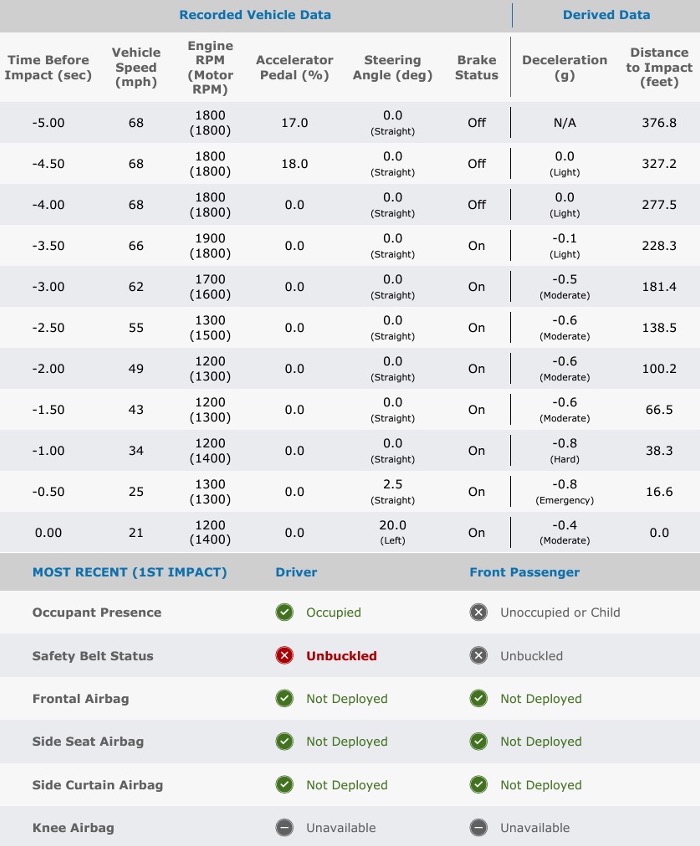
A comprehensive Accident Event Recorder provides insights into:
- Vehicle speed and acceleration prior to impact
- Brake application and timing
- Steering inputs and stability control activation
- Seatbelt usage and airbag deployment
- Impact severity, collision duration, and crash force measurements
- Time-stamped event logs for forensic accident reconstruction
How Accident Event Recorder Assists Individuals, Attorneys, and Insurance Companies
Individuals: Accident victims and drivers involved in collisions can use EDR data to support claims, refute false accusations, and ensure fair settlements. This data provides objective evidence regarding vehicle speed, braking, and driver inputs before impact. For those wrongly blamed for an accident, this information can be critical in proving responsible driving behavior and overturning liability claims.
Attorneys: Legal professionals rely on accident event recorder to build strong cases. Whether representing a client in a personal injury lawsuit or defending against a wrongful claim, attorneys use EDR data to reconstruct the crash, verify witness statements, and establish liability with scientific precision. Expert testimony based on this data often carries significant weight in court proceedings.
Insurance Companies: Insurers use accident data recorder to validate claims, detect fraudulent cases, and assess liability more accurately. By examining EDR data, insurance adjusters can determine the severity of an impact, confirm vehicle behavior prior to a crash, and identify inconsistencies in reported claims. This helps ensure fair settlements and prevents fraudulent payouts.
Case Studies
Using an EDR to Prove Fault in a Head-On Collision
A driver was involved in a head-on collision after another vehicle veered into their lane. The at-fault driver claimed they lost control due to mechanical failure, shifting blame away from negligence. Crenshaw Investigations performed an EDR download, revealing that the driver had not applied the brakes before impact and had instead been accelerating in the moments leading up to the crash. The steering angle data also showed no corrective action was taken to avoid the collision. This evidence proved driver error, ensuring liability was properly assigned.
Reconstructing an Intersection Crash with Conflicting Witness Statements
Two vehicles collided at an intersection, with each driver insisting they had the right of way. One driver claimed they were traveling at a normal speed, while the other alleged the first driver had sped up to beat a yellow light. Crenshaw Investigations extracted EDR data, which showed that the first driver had accelerated significantly before the impact. The analysis also confirmed a late braking attempt, suggesting that the driver realized they were going too fast to clear the intersection safely. This critical data helped the insurance company correctly assess fault.
Verifying Vehicle Control Before a Fatal Off-Road Crash
A high-speed crash resulted in a vehicle leaving the roadway and rolling over, leading to a fatality. The manufacturer claimed the crash was due to reckless driving, while the victim’s family suspected a mechanical failure. Crenshaw Investigations retrieved steering, throttle, and braking inputs from the EDR, which revealed that the driver had attempted to steer back onto the road, but the vehicle’s stability control system had failed to engage. This evidence became key in a wrongful death lawsuit, shifting responsibility to the automaker.
Frequently Asked Questions
Can an EDR detect if a driver lost control due to hydroplaning?
Yes. An EDR records steering input, wheel speed, and traction control engagement in the moments before a crash. If a vehicle begins hydroplaning, the data may show a sudden increase in wheel speed with no corresponding throttle input, indicating loss of traction. It can also confirm whether the driver attempted corrective steering maneuvers before impact.
Does an EDR record side-impact collisions differently from frontal crashes?
Yes. The amount of data recorded depends on the crash severity and vehicle impact zones. In frontal crashes, EDRs log detailed data such as braking force, airbag deployment timing, and seatbelt usage. In side-impact crashes, EDRs may capture lateral acceleration, yaw rate, and side airbag deployment status, which helps determine how the crash forces affected occupants.
Can EDR data prove whether a driver had cruise control activated at the time of a crash?
Yes. Many modern EDRs record whether cruise control or adaptive cruise control was engaged before a collision. If a driver claims they were not accelerating manually, the EDR can confirm if cruise control maintained or adjusted speed, which is valuable in cases involving sudden acceleration disputes.
What happens if multiple crash events occur within seconds?
Most EDRs can record multiple collision events, especially in multi-car pileups or rollover crashes. Some systems save separate impact phases, showing pre-impact braking, primary collision forces, and secondary impacts. Investigators use this data to reconstruct complex accident sequences where vehicles sustain multiple hits.
Can EDR data reveal if a driver attempted an evasive maneuver?
Yes. Steering angle data and throttle/brake inputs can show whether a driver tried to avoid an accident. For example, if a driver claims they swerved to avoid another vehicle but their EDR shows no steering input or braking, this could indicate inattentiveness or a false claim. Conversely, a rapid change in steering and braking force could support a driver’s claim of trying to avoid a hazard.

Why Choose Crenshaw Investigations?
Crenshaw Investigations is a trusted leader in Accident Event Recorder analysis, known for its forensic accuracy, legally admissible reporting, and expert consultation. Our specialists use advanced forensic tools to reconstruct accidents with precision, delivering clear, reliable evidence for legal proceedings and insurance claims.
We ensure that all accident data is accurately extracted and thoroughly analyzed, producing court-admissible reports relied upon by attorneys, insurance companies, and accident victims.
Whether you need data analysis to support a claim, dispute liability, or uncover the facts of an accident, Crenshaw Investigations provides professional, accurate, and scientifically backed accident data analysis services.
Need Expert Accident Event Recorder Services?
Contact us today to learn how our Accident Event Recorder services can provide clarity and support for your case. Whether you’re an attorney, insurance professional, or private individual, our EDR Experts are ready to collect, analyze, and interpret critical data to uncover the facts and strengthen your position.
Download your free copy of our EDR eBook: “Revealing the Facts: The Role of EDR Data in Precise Accident Reconstruction and Fraud Detection”
In this eBook, you’ll discover:
- The purpose and function of an Event Data Recorder (EDR)
- The process of extracting EDR data
- How EDR data can be used to detect and prevent fraudulent auto accident claims

Crenshaw Investigations offers professional investigations and services in the following areas of Los Angeles County:
Acton, Agoura, Agoura Hills, Agua Dulce, Alhambra, Alondra Park, Altadena, Antelope Valley, Arcadia, Arleta, Artesia, Athens, Atwater Village, Avalon, Avocado Heights, Azusa, Baldwin Hills, Baldwin Park, Bel Air, Bell, Bell Gardens, Bellflower, Beverly Crest, Beverly Grove, Beverly Hills, Beverlywood, Boyle Heights, Bradbury, Brentwood, Burbank, Calabasas, Canoga Park, Canyon Country, Carson, Castaic, Century City, Cerritos, Charter Oak, Chatsworth, Cheviot Hills, Chinatown, Citrus, Claremont, Commerce, Compton, Covina, Crescenta Valley, Cudahy, Culver City, Cypress Park, Del Aire, Del Rey, Diamond Bar, Downey, Downtown, Duarte, Eagle Rock, East Hollywood, East Los Angeles, East Pasadena, East Rancho Dominguez, East San Gabriel, East Whittier, Echo Park, El Monte, El Segundo, El Sereno, Encino, Exposition Park, Fairfax, Florence-Firestone, Florence-Graham, Franklin Canyon, Gardena, Glassell Park, Glendale, Glendora, Granada Hills, Hancock Park, Harbor City, Harbor Gateway, Hacienda Heights, Hawaiian Gardens, Hawthorne, Hermosa Beach, Hidden Hills, Highland Park, Hollywood, Hollywood Heights, Hollywood Hills, Huntington Park, Hyde Park, Industry, Inglewood, Irwindale, Jefferson Park, Koreatown, La Cañada Flintridge, La Crescenta, La Habra Heights, La Mirada, La Puente, La Verne, Ladera Heights, Lake Balboa, Lake Los Angeles, Lakeview Terrace, Lakewood, Lancaster, Lawndale, Leimert Park, Lennox, Leona Valley, Lincoln Heights, Littlerock, Lomita, Long Beach, Los Angeles, Los Feliz, Lynwood, Malibu, Manhattan Beach, Mar Vista, Marina del Rey, Mayflower Village, Maywood, Mid-City, Mid-Wilshire, Mission Hills, Monrovia, Montebello, Montecito Heights, Monterey Park, Montrose, Mount Olympus, Mount Washington, Newhall, North El Monte, North Hills, North Hollywood, Northridge, Norwalk, Pacific Palisades, Pacoima, Palmdale, Palms, Palos Verdes Estates, Panorama City, Paramount, Pasadena, Picfair Village, Pico Rivera, Playa del Rey, Playa Vista, Pomona, Pomona Valley, Porter Ranch, Quartz Hill, Rancho Palos Verdes, Rancho Park, Redondo Beach, Reseda, Rolling Hills, Rolling Hills Estates, Rosemead, Rowland Heights, San Dimas, San Fernando, San Fernando Valley, San Gabriel, San Gabriel Valley, San Marino, San Pasqual, San Pedro, Santa Clarita, Santa Clarita Valley, Santa Fe Springs, Santa Monica, Saugus, Sawtelle, Shadow Hills, Sherman Oaks, Sierra Madre, Signal Hill, Silver Lake, South El Monte, South Gate, South Los Angeles, South Pasadena, South San Gabriel, South San Jose Hills, South Whittier, Spaulding Square, Stevenson Ranch, Studio City, Sun Valley, Sunland, Sylmar, Tarzana, Temple City, Terminal Island, Topanga, Topanga Canyon, Torrance, Toluca Lake, Tujunga, University Park, Val Verde, Valencia, Valinda, Valley Glen, Valley Village, Van Nuys, Venice, Vernon, View Park-Windsor Hills, Vincent, Walnut, Walnut Park, Watts, West Adams, West Athens, West Carson, West Covina, West Hills, West Hollywood, West Los Angeles, West Puente Valley, West Rancho Dominguez, West Whittier-Los Nietos, Westchester, Westlake, Westlake Village, Westmont, Westwood, Whittier, Wilmington, Windsor Square, Winnetka, Woodland Hills, Willowbrook.
Crenshaw Investigations offers professional investigations and services in the following areas of Ventura County:
Bell Canyon, Camarillo, Casa Conejo, Channel Islands Beach, El Rio, Fillmore, Lake Sherwood, Meiners Oaks, Mira Monte, Moorpark, Newbury Park, Oak Park, Oak View, Ojai, Oxnard, Piru, Point Mugu, Port Hueneme, San Buenaventura, Santa Paula, Saticoy, Simi Valley, Somis, Thousand Oaks, Ventura.
Private Investigator Los Angeles, Private Investigator In Los Angeles, Los Angeles Private Investigators, Private Investigator In LA, Private Investigator LA, Investigators In Los Angeles, Private Detective Los Angeles, LA Private Investigator, Private Investigation Firm In LA, Private Investigator Ventura, Private Investigator In Ventura, Ventura Private Investigators, Investigators In Ventura, Private Detective Ventura, Private Investigation Firm In Ventura, California Private Investigator, Private Investigator Near Me