
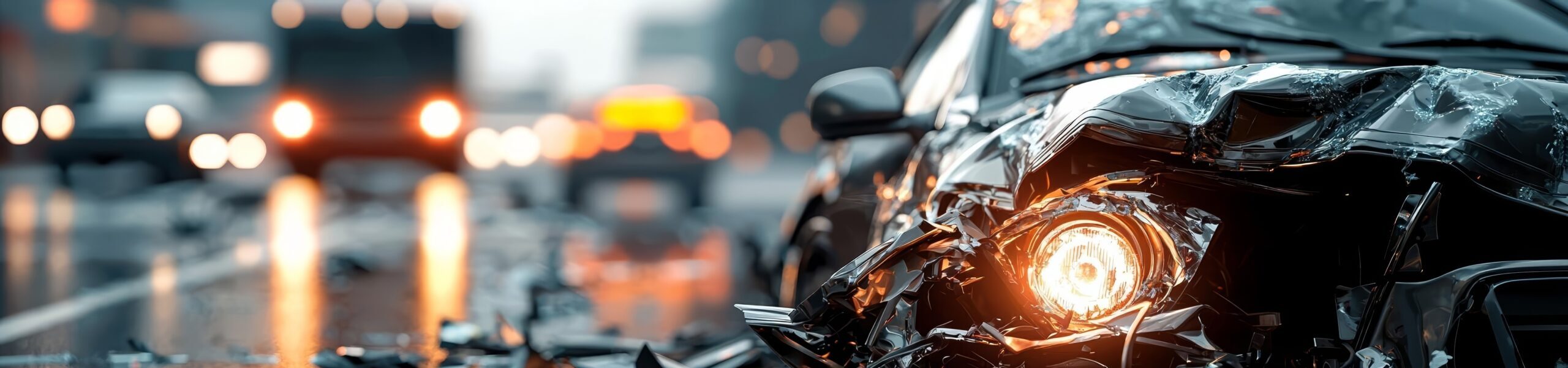
Vehicle Accident Data for Motor-Vehicle Claims and Litigation
Vehicle Accident Data from EDR/CDR Systems
Vehicle Accident Data refers to recorded vehicle information that may be preserved by a supported Event Data Recorder or related electronic module after a qualifying motor-vehicle accident.
Crenshaw Investigations provides EDR/CDR retrieval, vehicle inspection, photographic documentation, Vehicle Accident Data preservation, analysis, and written reporting for motor-vehicle claims, investigations, and litigation throughout California.
The information available varies by vehicle make, model, model year, installed systems, event type, recording threshold, event status, and module condition. Recorded data should be evaluated within those vehicle-specific parameters and in conjunction with the other evidence relevant to the assignment.
Have an active motor-vehicle matter, or want a practical overview of EDR evidence?
What Is Vehicle Accident Data?
Vehicle Accident Data in this context is information recorded by a supported Event Data Recorder or related electronic module when a collision or other qualifying event meets the vehicle’s recording criteria.
Depending on the vehicle, the available record may contain technical information from a short interval before impact, during the event, and immediately afterward.
Some supported vehicles may preserve one event, while others may contain multiple event records with different status, timing, pre-crash values, delta-V, restraint information, or deployment activity.
The presence of recorded data does not by itself establish fault or fully reconstruct a collision. The information should be interpreted using manufacturer-specific definitions and limitations and compared with the other available evidence.

Vehicle Accident Data / EDR Services
Depending on the vehicle, assignment, and requested scope of work, Vehicle Accident Data services may include:
- Preliminary vehicle-support and EDR feasibility review
- On-site vehicle inspection and photographic documentation
- Diagnostic-connector EDR/CDR retrieval
- Direct-to-module retrieval when required by vehicle condition
- Bosch CDR, Tesla, and Hyundai/Kia-supported crash-data retrieval
- Identification and preservation of available event records
- Preservation and delivery of native files and manufacturer-generated reports
- Evaluation of recorded parameters and vehicle-specific limitations
- Written EDR/CDR reporting and technical consultation
What Vehicle Accident Data May Be Available?
The information available as Vehicle Accident Data varies by vehicle make, model, model year, installed systems, event type, recording parameters, and module condition. Depending on the supported vehicle and recorded event, available information may include:
- Pre-crash vehicle speed
- Service-brake status and brake-pressure information, where recorded
- Accelerator-pedal or throttle input
- Engine or electric-motor speed
- Steering input
- Stability-control and ABS activity
- Longitudinal and lateral delta-V
- Crash-pulse timing and event sequence
- Driver and passenger restraint status
- Airbag and pretensioner deployment commands
- Event status, event timing, and multiple-event information
- Ignition-cycle, odometer-at-event, and diagnostic information, where recorded
- Other manufacturer-specific vehicle and crash information
How Vehicle Accident Data Assists
Vehicle Accident Data for Attorneys and Law Firms
Recorded vehicle information may assist attorneys in evaluating disputed speed, braking, accelerator input, steering, restraint use, crash severity, event timing, and the sequence of multiple impacts. The data may be compared with statements, photographs, police reports, damage, repair records, and other evidence.
Vehicle Accident Data for Insurance and Claims Professionals
Claims professionals, SIUs, corporate risk departments, and authorized business clients may use EDR/CDR information to evaluate consistency, exposure, crash severity, event sequence, and technical questions requiring further investigation or coordination with counsel.
Vehicle Accident Data for Vehicle Owners
Vehicle owners may use recorded vehicle information to better understand what the applicable module preserved concerning pre-crash operation, restraints, deployment activity, delta-V, event timing, and other supported parameters surrounding a qualifying accident.
How Vehicle Accident Data Can Assist a Case
When accident accounts conflict or important vehicle actions are disputed, Vehicle Accident Data may provide objective technical information that can be evaluated with the other evidence in the matter.
Vehicle Accident Data and Pre-Crash Operation
Depending on the vehicle, available EDR information may preserve speed, braking, accelerator input, steering, or stability-control activity from a short interval before impact.
Those recorded values can be compared with driver statements, photographs, damage, and other evidence when evaluating the reported sequence of events.
Vehicle Accident Data and Multiple Events
Some supported vehicles may preserve more than one event record, particularly in a multi-impact accident or when another qualifying event occurred before or after the loss under review.
Event status, timing, pre-crash values, delta-V, restraint information, and other recorded parameters may help distinguish the available records and determine which event most reasonably corresponds with the accident being investigated.
Vehicle Accident Data Limitations
An EDR report may show that a particular parameter was not recorded, that an impact did not meet a required recording threshold, or that the available interval does not answer the disputed question.
Identifying those limitations is part of an objective evaluation and helps prevent the recorded information from being overstated.
Vehicle Accident Data Frequently Asked Questions
What is Vehicle Accident Data?
What Vehicle Accident Data may be recorded?
Does every accident produce Vehicle Accident Data?
Can Vehicle Accident Data determine fault?
Can a vehicle contain more than one recorded event?
Can Vehicle Accident Data be evaluated after the vehicle is unavailable?
Why Choose Crenshaw Investigations?
Crenshaw Investigations combines licensed investigative experience with Certified EDR/CDR Technician & Data Analyst credentials, specialized retrieval systems, forensic vehicle documentation, and clear written reporting.
Flexible Retrieval Capability
Assignments may involve standard diagnostic-connector retrieval or supported direct-to-module access when vehicle condition requires alternative access.
Assignment-Focused Deliverables
Depending on the agreed scope, deliverables may include inspection photography, available native data files, manufacturer-generated reports, written retrieval and analysis reports, and technical consultation.
Impartial Evidence Evaluation
Available EDR information is evaluated in consideration of the surrounding evidence rather than to support a predetermined outcome. Crenshaw Investigations serves attorneys, law firms, insurance companies, businesses, individuals, and vehicle owners throughout California.
Submit an EDR Matter for Review
To request preliminary review of a potential EDR/CDR assignment, download and complete our fillable EDR Case Submission Form. Then return to this section and upload the completed form with any available non-sensitive vehicle photographs or appropriate supporting vehicle-related documents.
We will review the available vehicle, location, access, timing, and assignment information and respond by email regarding likely vehicle support, retrieval feasibility, requested scope, estimated fees, authorization requirements, and appropriate next steps.
Upload Your Completed Submission
Enter your contact information below and upload the saved EDR Case Submission Form. Supporting photographs or appropriate vehicle-related documents may also be included.
Submission does not create an investigative, consulting, or expert engagement, confirm acceptance of the assignment, or authorize work. An assignment is accepted only after availability, scope, estimated fees, authorization, and terms are confirmed in writing. Do not upload medical records, Social Security numbers, financial records, or other highly sensitive or privileged materials through this form.
Learn More About EDR Evidence
Understanding Event Data Recorder (EDR) Evidence
A Practical Guide for Motor-Vehicle Claims, Investigations, and Litigation
Download our complimentary educational guide to learn what Event Data Recorder evidence is, what recorded vehicle information may be available, how the data is retrieved and preserved, and when it may assist with motor-vehicle claims, investigations, and litigation.
In this guide, you’ll learn:
- What EDR evidence is—and what it cannot determine by itself
- How recorded crash data is retrieved, preserved, and evaluated
- What vehicle, driver-input, restraint, and event information may be available
- How EDR evidence may assist claims evaluation, investigations, discovery, litigation, and settlement strategy

Crenshaw Investigations offers professional investigations and services in the following areas of Los Angeles County:
Acton, Agoura, Agoura Hills, Agua Dulce, Alhambra, Alondra Park, Altadena, Antelope Valley, Arcadia, Arleta, Artesia, Athens, Atwater Village, Avalon, Avocado Heights, Azusa, Baldwin Hills, Baldwin Park, Bel Air, Bell, Bell Gardens, Bellflower, Beverly Crest, Beverly Grove, Beverly Hills, Beverlywood, Boyle Heights, Bradbury, Brentwood, Burbank, Calabasas, Canoga Park, Canyon Country, Carson, Castaic, Century City, Cerritos, Charter Oak, Chatsworth, Cheviot Hills, Chinatown, Citrus, Claremont, Commerce, Compton, Covina, Crescenta Valley, Cudahy, Culver City, Cypress Park, Del Aire, Del Rey, Diamond Bar, Downey, Downtown, Duarte, Eagle Rock, East Hollywood, East Los Angeles, East Pasadena, East Rancho Dominguez, East San Gabriel, East Whittier, Echo Park, El Monte, El Segundo, El Sereno, Encino, Exposition Park, Fairfax, Florence-Firestone, Florence-Graham, Franklin Canyon, Gardena, Glassell Park, Glendale, Glendora, Granada Hills, Hancock Park, Harbor City, Harbor Gateway, Hacienda Heights, Hawaiian Gardens, Hawthorne, Hermosa Beach, Hidden Hills, Highland Park, Hollywood, Hollywood Heights, Hollywood Hills, Huntington Park, Hyde Park, Industry, Inglewood, Irwindale, Jefferson Park, Koreatown, La Cañada Flintridge, La Crescenta, La Habra Heights, La Mirada, La Puente, La Verne, Ladera Heights, Lake Balboa, Lake Los Angeles, Lakeview Terrace, Lakewood, Lancaster, Lawndale, Leimert Park, Lennox, Leona Valley, Lincoln Heights, Littlerock, Lomita, Long Beach, Los Angeles, Los Feliz, Lynwood, Malibu, Manhattan Beach, Mar Vista, Marina del Rey, Mayflower Village, Maywood, Mid-City, Mid-Wilshire, Mission Hills, Monrovia, Montebello, Montecito Heights, Monterey Park, Montrose, Mount Olympus, Mount Washington, Newhall, North El Monte, North Hills, North Hollywood, Northridge, Norwalk, Pacific Palisades, Pacoima, Palmdale, Palms, Palos Verdes Estates, Panorama City, Paramount, Pasadena, Picfair Village, Pico Rivera, Playa del Rey, Playa Vista, Pomona, Pomona Valley, Porter Ranch, Quartz Hill, Rancho Palos Verdes, Rancho Park, Redondo Beach, Reseda, Rolling Hills, Rolling Hills Estates, Rosemead, Rowland Heights, San Dimas, San Fernando, San Fernando Valley, San Gabriel, San Gabriel Valley, San Marino, San Pasqual, San Pedro, Santa Clarita, Santa Clarita Valley, Santa Fe Springs, Santa Monica, Saugus, Sawtelle, Shadow Hills, Sherman Oaks, Sierra Madre, Signal Hill, Silver Lake, South El Monte, South Gate, South Los Angeles, South Pasadena, South San Gabriel, South San Jose Hills, South Whittier, Spaulding Square, Stevenson Ranch, Studio City, Sun Valley, Sunland, Sylmar, Tarzana, Temple City, Terminal Island, Topanga, Topanga Canyon, Torrance, Toluca Lake, Tujunga, University Park, Val Verde, Valencia, Valinda, Valley Glen, Valley Village, Van Nuys, Venice, Vernon, View Park-Windsor Hills, Vincent, Walnut, Walnut Park, Watts, West Adams, West Athens, West Carson, West Covina, West Hills, West Hollywood, West Los Angeles, West Puente Valley, West Rancho Dominguez, West Whittier-Los Nietos, Westchester, Westlake, Westlake Village, Westmont, Westwood, Whittier, Wilmington, Windsor Square, Winnetka, Woodland Hills, Willowbrook.
Crenshaw Investigations offers professional investigations and services in the following areas of Ventura County:
Bell Canyon, Camarillo, Casa Conejo, Channel Islands Beach, El Rio, Fillmore, Lake Sherwood, Meiners Oaks, Mira Monte, Moorpark, Newbury Park, Oak Park, Oak View, Ojai, Oxnard, Piru, Point Mugu, Port Hueneme, San Buenaventura, Santa Paula, Saticoy, Simi Valley, Somis, Thousand Oaks, Ventura.
Private Investigator Los Angeles, Private Investigator In Los Angeles, Los Angeles Private Investigators, Private Investigator In LA, Private Investigator LA, Investigators In Los Angeles, Private Detective Los Angeles, LA Private Investigator, Private Investigation Firm In LA, Private Investigator Ventura, Private Investigator In Ventura, Ventura Private Investigators, Investigators In Ventura, Private Detective Ventura, Private Investigation Firm In Ventura, California Private Investigator, Private Investigator Near Me